
Mindmelt: how to play, clusters and fusion.
A beginner’s manual recovered from an alien’s laundry basket.

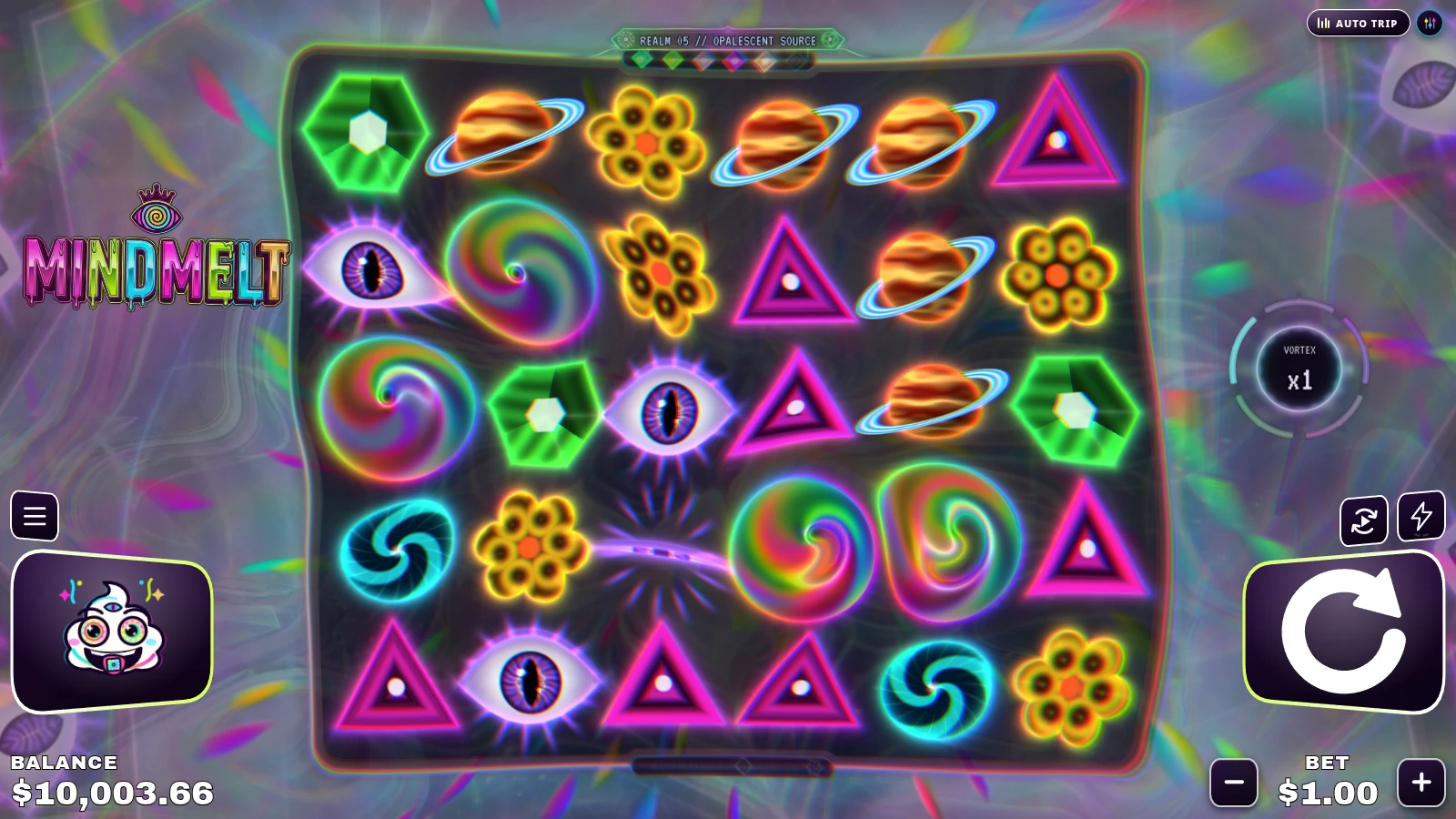
Mindmelt uses a 6×5 grid. Five or more matching symbols connected horizontally or vertically form a winning cluster. Fusion creates a higher-tier symbol, the grid refills, and another reaction can follow within the same round.
Development guide. Both games are awaiting release. Features can change; the released game’s Info panel and paytable take precedence. No final RTP, odds or maximum payout is claimed here.
First, locate your last brain cell.
Before playing, open the game’s rules and paytable. Check the selected wager, the active play mode and any extra feature cost. Start the round only when the displayed total is the amount you intend to spend.
The board has six columns and five rows: thirty places for something cosmic to happen. You do not drag pieces, swap symbols or steer a match. Watch the supplied board resolve. This is a slot game, not a puzzle you can solve into a guaranteed payout.
Five friends. Actual physical contact.
A normal paying cluster needs at least five matching symbols joined through horizontal or vertical neighbours. A diagonal touch does not connect two groups. Separate groups of the same symbol are not automatically one cluster.
Picture five matching symbols forming an L: the vertical and horizontal arms connect, so they can belong to the same cluster. Put the same five symbols on isolated diagonal squares and that arrangement alone does not meet the connected-cluster rule. Consult the paytable for the symbol’s award.
Fusion: when the grid gets ideas.
Mindmelt’s defining mechanic is cluster fusion. A resolving cluster can forge a higher-tier symbol in the cleared space. New symbols drop into the remaining gaps and the grid checks for the next reaction.
PORTAL symbols have their own behaviour; do not treat every special symbol as an ordinary fusion ingredient. The game’s Info panel is the place for those exceptions.
Two multiplier ideas. One suspicious eye.
The Trip Multiplier follows the evolving trip. Grid multipliers belong to positions on the board. They are different systems: a number associated with a cell is not a promise that your entire wager receives that number.
Watch the win breakdown and completed round total rather than adding every decorative number on screen. Feature states and special symbols can change how a round unfolds. Our separate bonus guide explains the main named features without requiring an astronomy qualification.
How do you win at Mindmelt?
A paying result comes from the game’s matching-cluster and feature rules. Understanding those rules helps you read a result; it does not let you choose the next board. No click timing, matching colour outfit or extraterrestrial laundry ritual guarantees a win.
Set a spending limit before starting and stop when you reach it. Extra-cost modes change what you pay and how the selected mode operates. A bigger feature button is not a safer way to recover a loss.
Questions we actually answer.
Do diagonals count in Mindmelt?
No. Ordinary matching clusters connect horizontally or vertically; diagonal contact alone does not join them.
Is Mindmelt a match-three puzzle?
No. Its normal clusters require at least five connected matching symbols, and you do not swap pieces to control the outcome.
Can I play Mindmelt on Stake yet?
Mindmelt is awaiting release. Our Stake button currently opens the games lobby; there is no verified direct game URL yet.
Published by Shitpost Games using our current game rules and development builds. The surreal narrators are fictional; editorial illustrations are AI-generated. Their conspiracy theories do not describe game mechanics. Read the full rules inside the game when it launches.
Meet MINDMELT18+ · Outcomes are uncertain. Set a budget and never chase losses.
YOU’VE COME THIS FAR.

Mindmelt bonuses and multipliers explained
Overdrive, Synesthesia, The Source. The mushroom has brought a clipboard.
Read the guide 5 MIN · EXPECT A DETOUR