Man proposes putting the moon on a timesheet. The moon requests annual leave.
An efficiency scheme for the night sky has immediately encountered a difficult conversation about overtime.
This is an invented story. Events, characters and quotations are fictional. The illustration is AI-generated. Please do not call the supermarket.
It began, as these things do, with a spreadsheet.
A fictional consultant named Derek has unveiled an ambitious plan to improve the night sky by requiring the moon to record its hours. His presentation, titled Lunar Accountability: Doing More With Less Moon, argues that humanity has accepted an unacceptable level of vagueness from an object that appears to leave work whenever it feels like it.
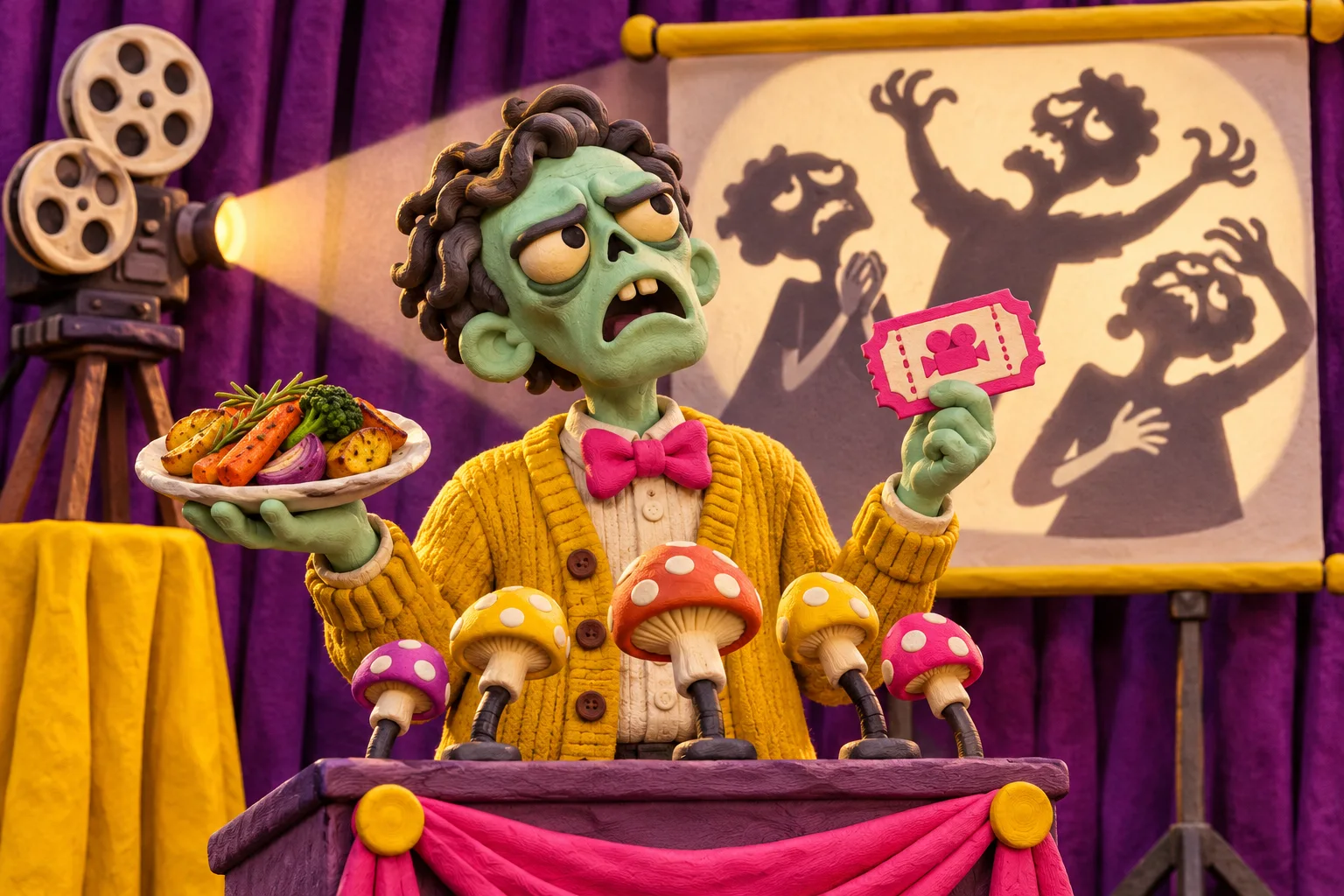
“Some nights it is full,” Derek explained to an audience assembled mostly because the meeting invitation mentioned sandwiches. “Other nights it is a sliver. Sometimes I can see it in the afternoon. We have no visibility into its capacity planning.” He gestured toward a pie chart that was, on closer inspection, simply a photograph of the moon.
The proposal would require the moon to clock in at sunset, identify three measurable deliverables, and submit a short explanation whenever a cloud prevented it from being seen. Derek insists this would not change the beauty of the night sky. It would simply make the beauty easier to reconcile against a quarterly target.
The first employee-relations issue is quite large.
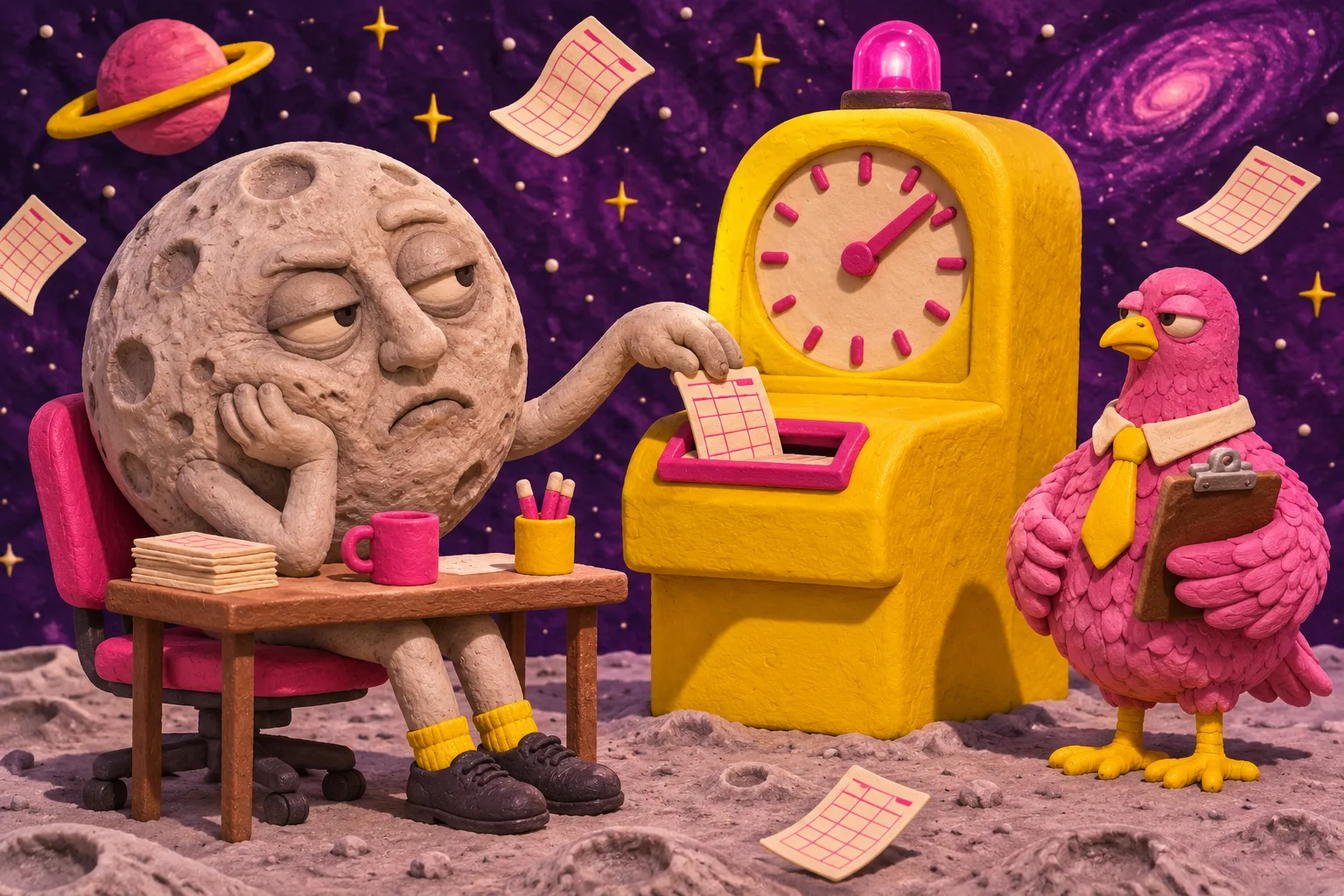
The moon’s response arrived on a single silver sheet of paper: it would like to take some annual leave. Derek had not budgeted for this. He had assumed that a celestial body with no obvious desk could not accrue leave, but the moon pointed out that it had been visible in the company calendar for a very long time.
It also requested reimbursement for travel, a better definition of “full,” and confirmation that eclipses would not be treated as unauthorized absence. Derek suggested these matters could be discussed in a one-to-one. The moon asked whether the one-to-one could take place somewhere with less atmospheric interference.
A pigeon appointed to supervise the rollout has advised both parties to keep an open mind. The pigeon was selected because it had already been standing on the meeting-room windowsill and appeared confident. It has since submitted an invoice consisting entirely of footprints. Derek says the invoice is “refreshingly concise.”
What, exactly, does a good moon look like?
The project team’s first workshop attempted to define success. Suggestions included brightness, roundness, romantic atmosphere, and the number of people who said “look at the moon” while standing outside a restaurant. A proposal to measure wolf satisfaction was abandoned after nobody could agree on how a wolf would access the feedback form.
Derek eventually settled on a dashboard featuring Moon Present, Moon Mostly Present, and Moon Taking This Personally. Each category is represented by a different shade of yellow. The moon requested a fourth category, Moon Behind You, after Derek spent twenty minutes evaluating the wrong part of the sky.
Our correspondent asked whether the scheme accounted for the difference between being visible and doing useful work. Derek said that was an excellent question and placed it in a parking lot. The parking lot now contains seventeen excellent questions, two unresolved assumptions, and a bicycle that belonged to the previous tenant.
Early trials have produced several documents.
A pilot programme was conducted using a desk lamp and a hard-boiled egg. The egg was punctual but showed limited initiative. The lamp met every brightness target while failing to inspire a single meaningful poem. Derek described the results as promising and recommended a larger egg for the next phase.
The team also tested a new digital clock-in terminal by holding it toward the sky. It received no response from the moon, but did connect to a nearby printer. The printer immediately produced forty-seven copies of the lunar leave request. Nobody knew where it had obtained the document. The pigeon declined to comment.
When asked whether an astronomer had reviewed the plan, Derek said he had sent an invitation to someone with a star in their email signature. That person turned out to sell conservatories. They nevertheless provided useful feedback about glass roofs, which is now described in the project report as cross-disciplinary validation.
There may be a simpler solution. Nobody likes it.
One attendee suggested that people could simply look at the sky and enjoy whatever the moon happened to be doing. The room fell silent. This approach had no implementation roadmap, no reporting framework, and no obvious role for the pigeon. Derek thanked the attendee for their contribution and moved to the next slide.
By the afternoon, the original timesheet had expanded into a twelve-month transformation programme. It now includes lunar onboarding, cloud stakeholder alignment, and a workshop called Craters: Challenges or Opportunities? The moon has declined the workshop on the grounds that its craters are not interested in personal development.
At the time of this entirely fictional report, the moon was continuing to be the moon. Derek was continuing to improve the presentation. The pigeon had eaten the attendance sheet. Somewhere in the quiet space between the three, a perfectly good night was happening without a single performance indicator, and several people accidentally enjoyed it.
Original fiction published by Shitpost Games. This is comedy, not reporting or game advice. For actual mechanics, read the game guides.